Morphologically, the popular dwelling of self-promotion, often the product of self-construction by relatives and friends, was a single-storey dwelling which initially consisted of a single-room core. Over time, this core evolved, was extended (addition) or even replaced by more permanent structures. In addition to the horizontal extensions, the core was also expanded vertically through the so-called ‘panosikoma’ (adding extra floors) and gradually transformed into a small apartment building. This small, low-rise apartment building constitutes the basic core of the so-called ‘family multi-storey apartment building’ (family polykatoikia), which will be analysed in detail below.
‘Panosikoma’, or upper-level extension, is a traditional building technique that refers to the design and construction of a new house on the first floor of the existing family one. It is a common practice among families..
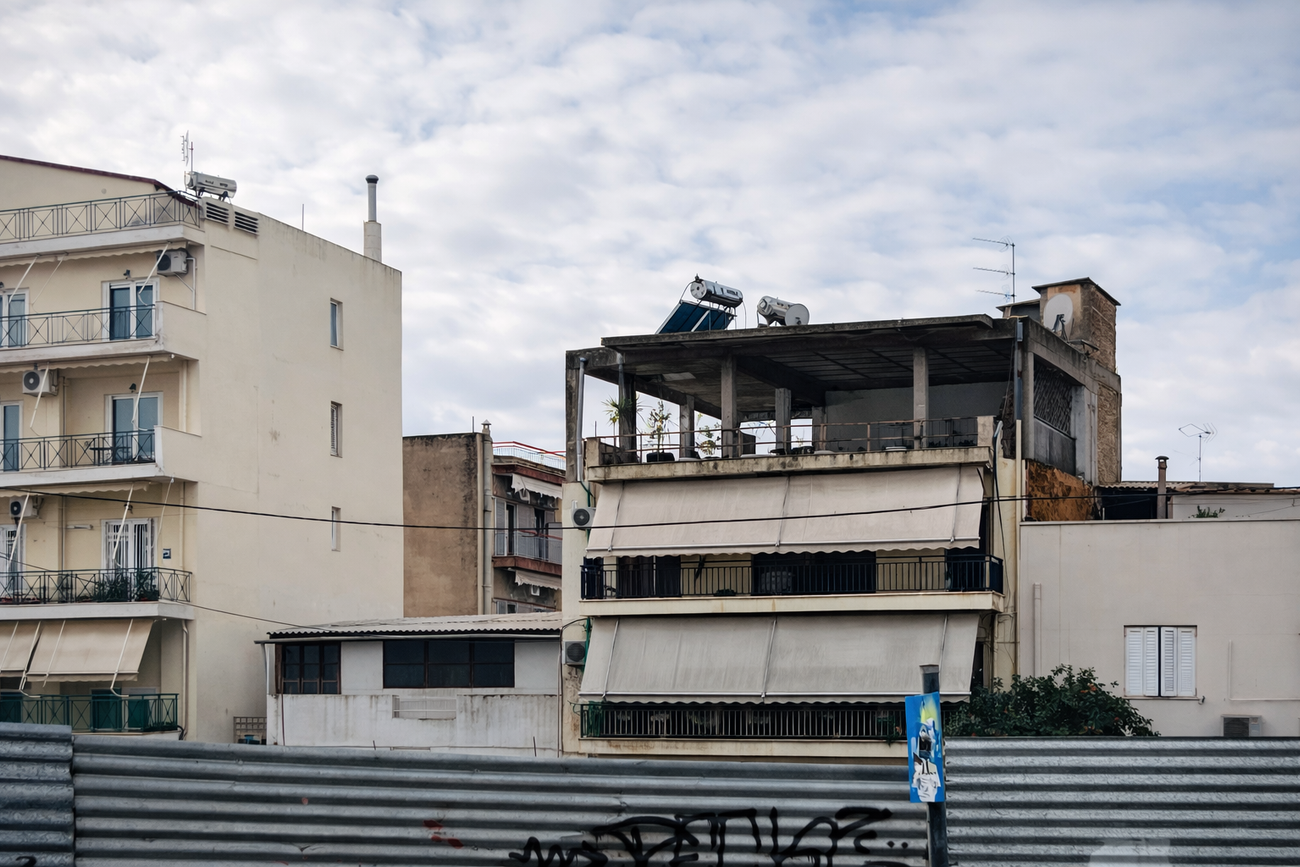
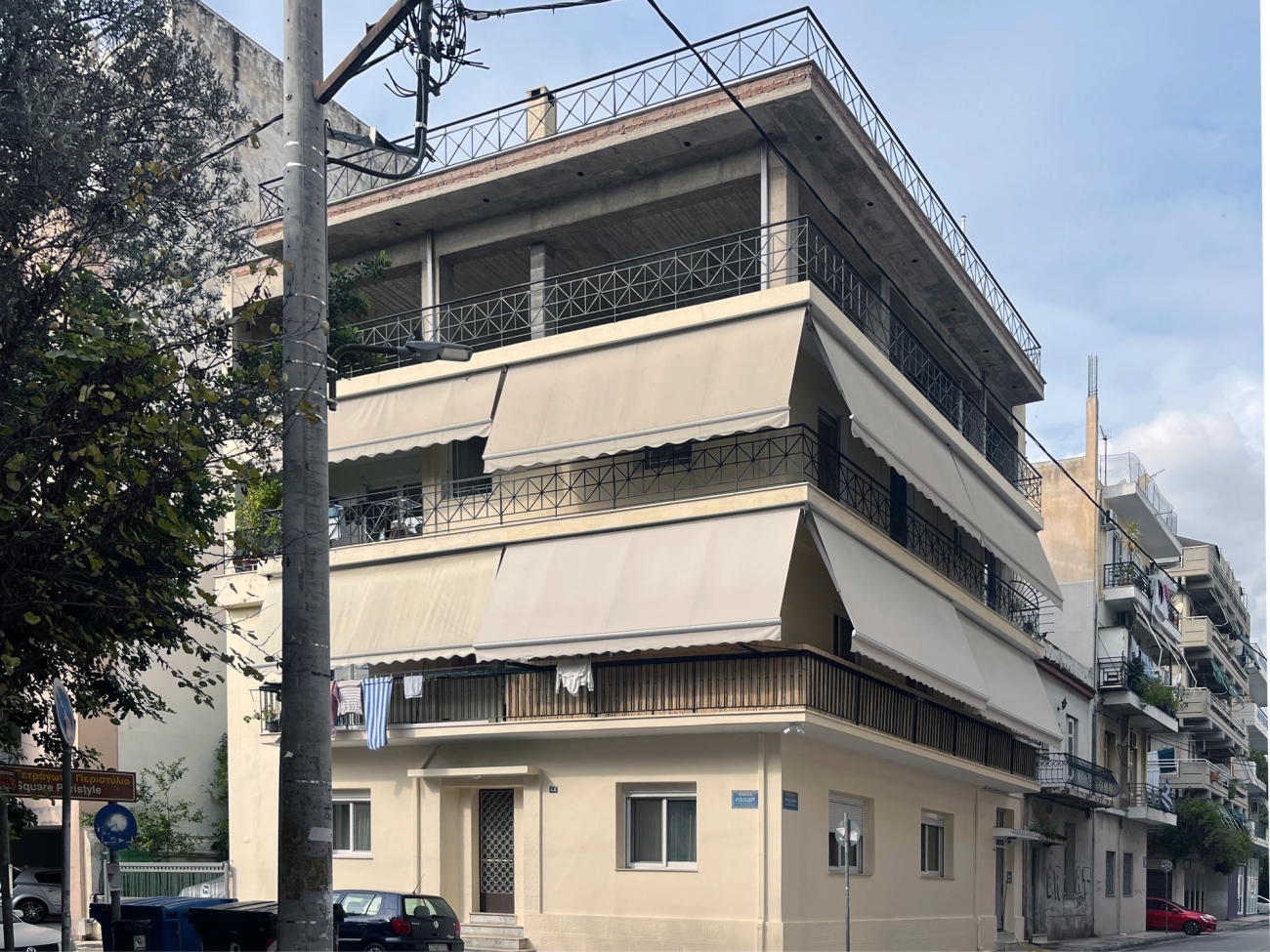
The vertical and/or horizontal extension of a building is a complex and difficult process. First, the structural capacity of the existing building is analyzed in accordance with the Greek Code for Interventions (KAN.EPE.). The principle that must apply to vertical extensions is very simple, but for many prospective clients it is discouraging: the final building, together with the added stories, must comply with today’s seismic code. This is extremely difficult without strengthening interventions to the existing structure, which tend to be costly, disruptive for the occupants, and time-consuming—the older the building is, the more so.
Especially for buildings constructed before 1983, when a seismic code was introduced and buildings began to have substantial reinforcement in their structural frames, this rule often leads to intervention costs and levels of disturbance that are prohibitive.can be done by extending the existing concrete sceleton of the building or by an external metal structure as in many more contemporary cases. πανωσήκωμα ή με εξωσκελετό
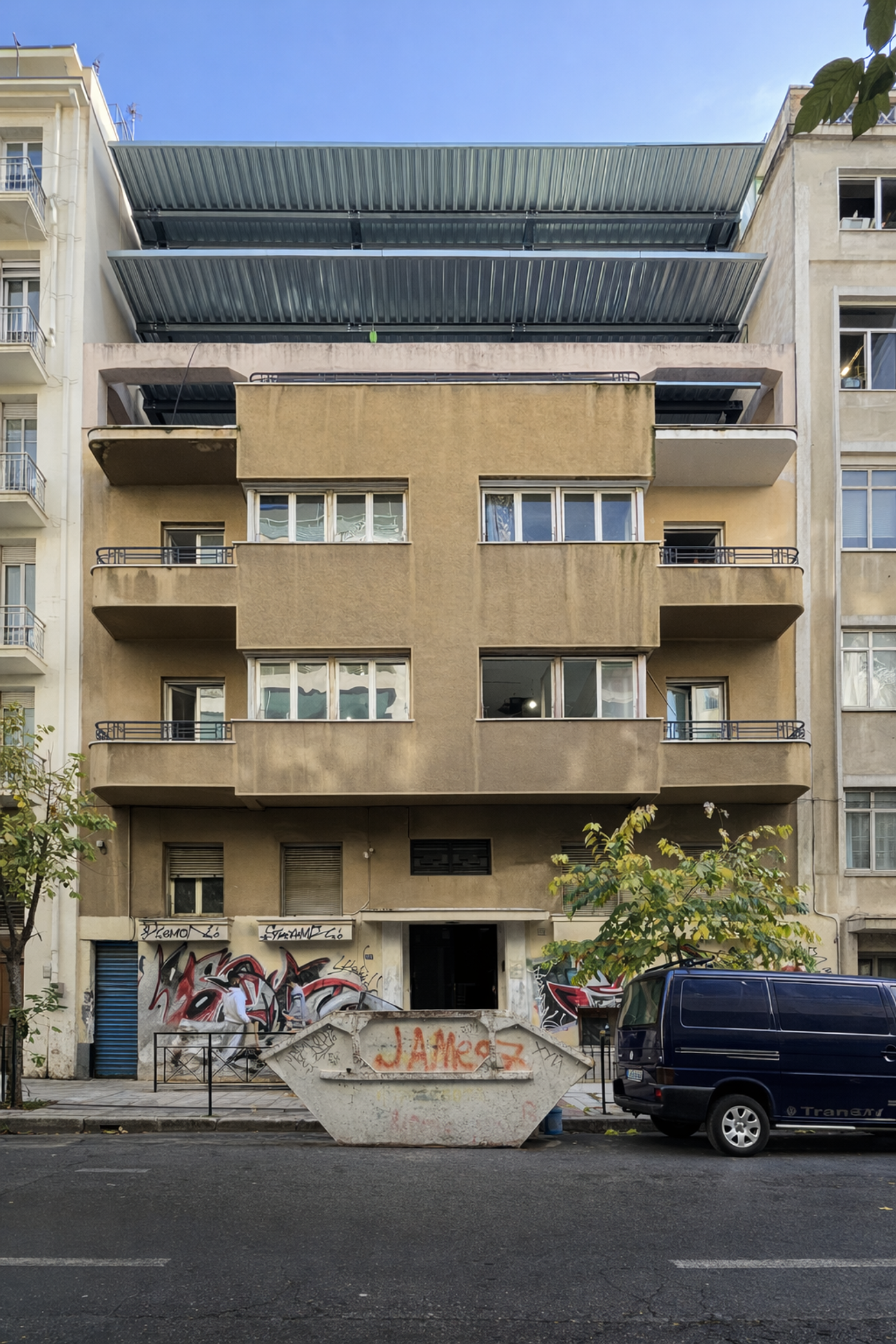
The construction method of the self-promotion family apartment building differed from that of a typical apartment building through the antiparochi system. Given that the construction cost of even such a small apartment building was relatively high for the working and lower-middle classes, the family apartment building was usually not constructed all at once but in phases. The different phases involved both the construction of the load-bearing structure –specifically the concrete framework– and the finishing works of each apartment (such as masonry, fillings, interior fittings, etc.). There are cases where the ground floor of the apartment building was initially constructed, and later, with the well-known method of ‘panosikoma’ (adding extra floors) and ‘anamones’ (rebars protruding from the rooftop slab, intended to support one or more additional floors in the future), floors were added. In other cases, the concrete framework for all building was poured at once, but the final completion of all the floors extended over the years. The final phase of the expansion of the family apartment building usually involves the rooftop structure (‘doma’).
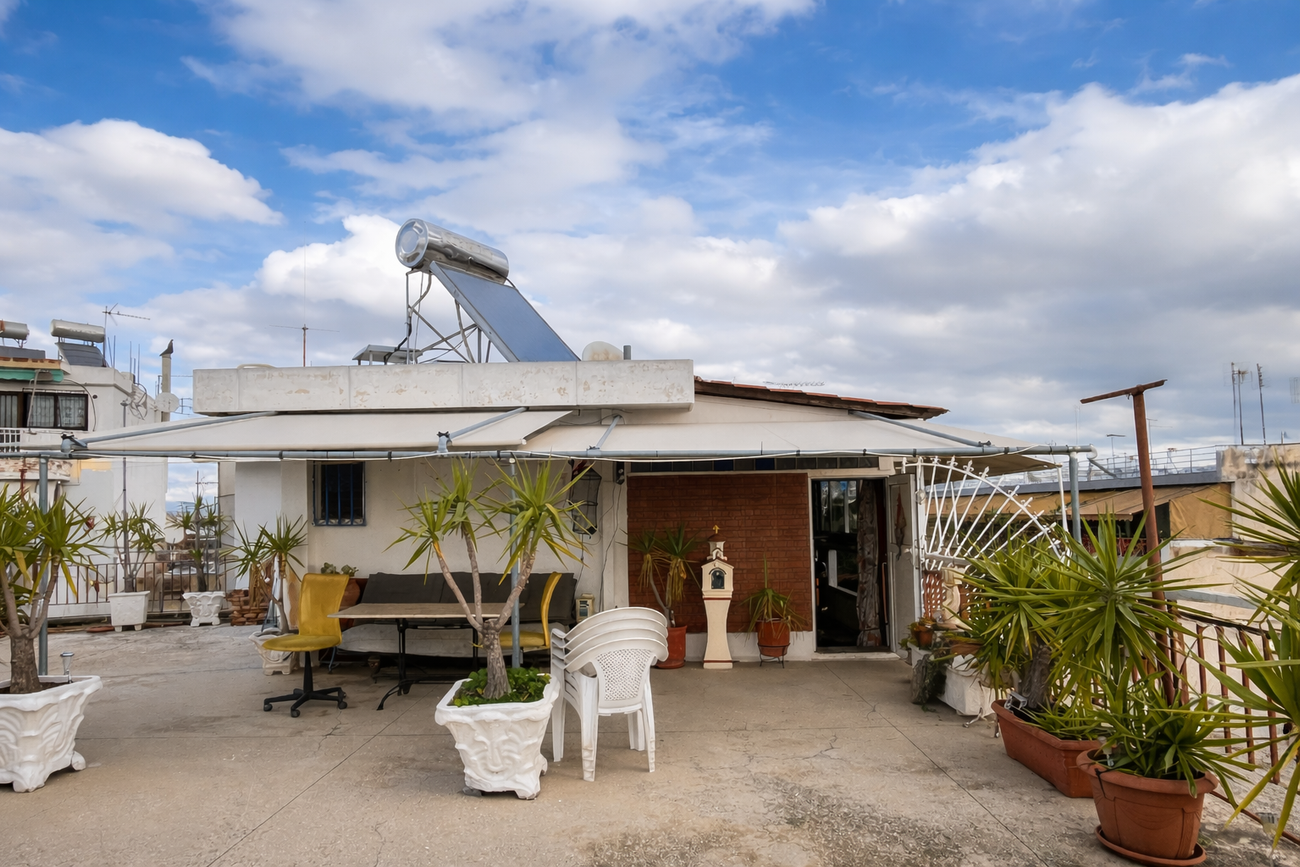
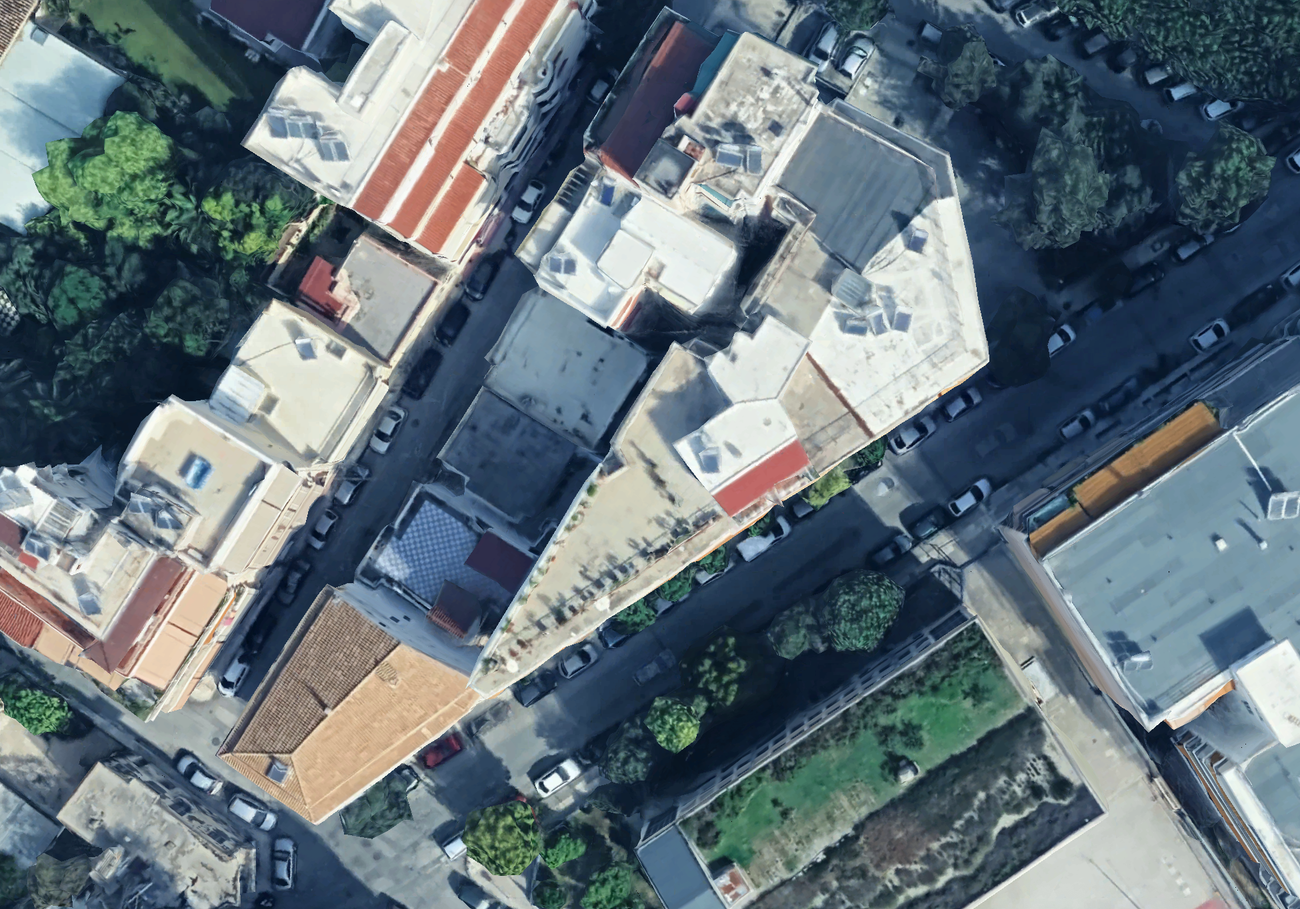
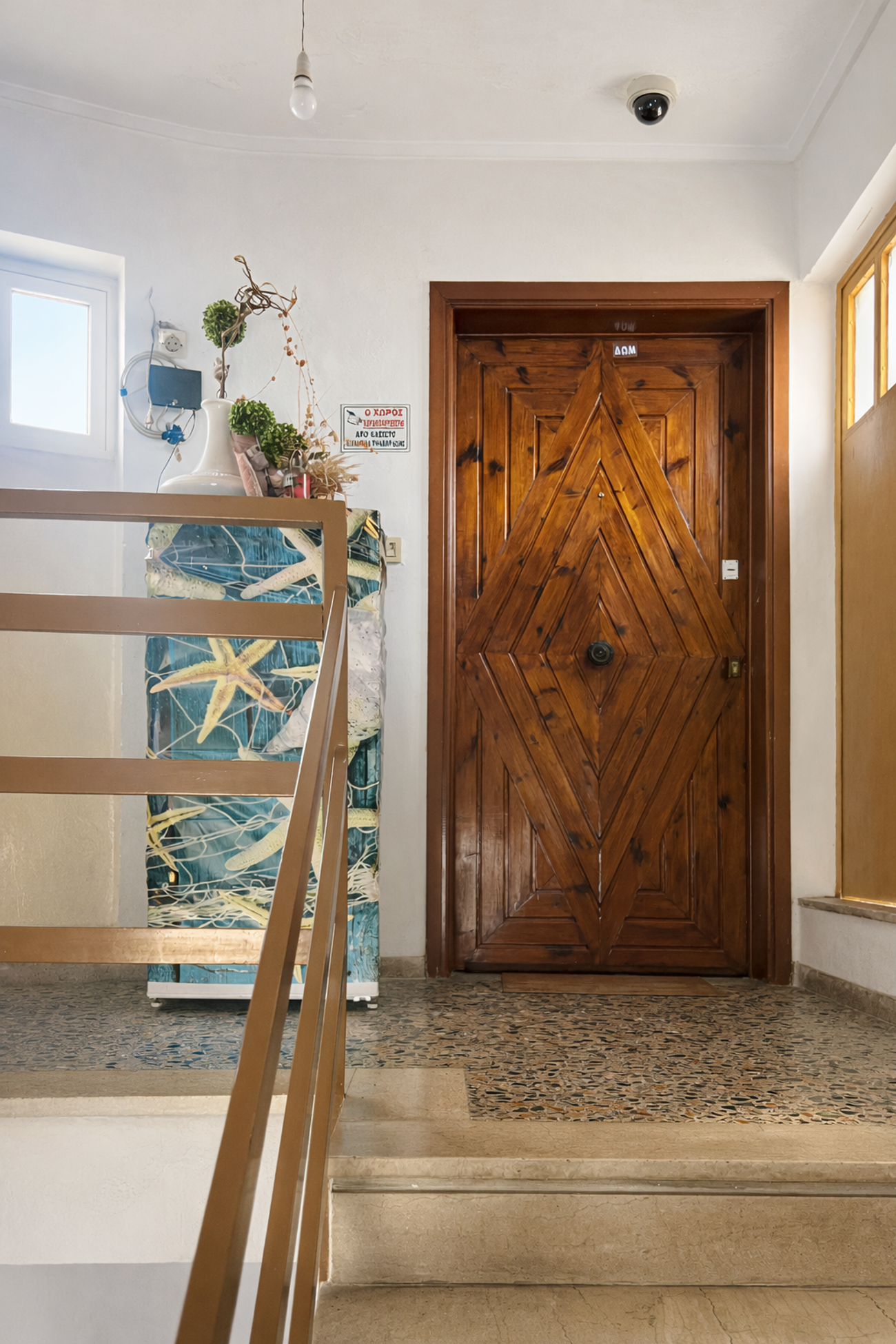
The small room, which was initially constructed either as the end of the staircase or as the top of an elevator shaft, is horizontally extended, often illegally, onto the shared rooftop terrace, transforming into a small studio or an enlarged storage room for family members. The widespread arbitrariness of expanding the rooftop structure onto the communal terrace seems like an obvious move in the case of the family apartment building, as the spatial needs are high and there are no objections or controls from other co-owners.
The financing of family apartment buildings also occurred in phases, parallel to the progress of construction work, as the initial capital usually did not cover the complete construction. To reduce costs, family members sometimes personally participated in the construction process. Apart from a phased completion, there were also cases of family apartment buildings that were fully constructed from the beginning. More financially robust social strata (professionals with ties to the construction sector, such as contractors, families who sold assets in the provinces, or families with substantial savings) managed to immediately build an apartment building for self-housing.